How to run an executive search assignment
A step-by-step guide to running an executive search: scope the brief, map the market, approach leaders discreetly, and present a slate the client trusts.
Executive search is a different craft from volume recruiting, and running an assignment well is less about speed and more about judgement. You are not filtering a flood of applicants; you are identifying a small set of leaders, often people who are not looking, approaching them with care, and building a case the client will stake a major hire on. Get the process right and the search feels calm and deliberate. Get it wrong and you burn weeks and your credibility.
This guide walks through how to run an executive search assignment end to end, written for independent search consultants and boutique firms. If you want the shorter version of why the right tooling helps, see recruitment software for executive search.
1. Scope the real role before you touch the market
The single biggest failure in executive search is starting the market work before the brief is truly understood. A job title at this level hides more than it reveals. “Head of Operations” could mean a steady-hand administrator or a transformation leader, and the two are not interchangeable.
Spend real time with the client to pin down what the role actually requires:
- Scope and scale. The size of the team, the budget or P&L owned, the breadth of the remit. A leader who has run a function of ten is a different hire from one who has run two hundred.
- The stage and context. Building from scratch, scaling fast, fixing a problem or steadying a mature operation are different jobs. A leader who thrives in one can struggle in another.
- The specific outcome. What does success look like in twelve to eighteen months? The answer tells you what track record to look for.
- The non-negotiables. Sector experience, location, compensation band, and anything that is genuinely pass or fail.
Write these down and agree them with the client. This is the brief you will assess everyone against, and it is what keeps a confidential, judgement-led search from drifting. The same discipline applies to any mandate, which we cover in how to run a recruitment mandate, but at executive level the cost of a vague brief is far higher.
2. Map the market deliberately
With the brief agreed, map the market before you approach anyone. The goal is a considered picture of where the right leaders sit: the companies that build the kind of leader you need, the adjacent sectors worth including, and the specific people who fit the scope and scale you defined.
This is longlisting with intent, not a keyword search. You are building a target list of organisations and individuals, noting why each is relevant, and keeping track of status as you work through them. Because the numbers are small and the detail matters, how you organise this longlist directly affects the quality of the search. Keeping the target list, your notes and each person’s status in one place, rather than a sprawling pipeline, is what lets you run the map methodically.
3. Approach discreetly, because the approach is part of the assessment
Executive search is confidential by nature. The candidates are often employed, senior and not actively looking, and a clumsy approach does damage, to the candidate, to your client’s reputation, and to your own standing. At this level, how you reach out is itself part of the assessment: a leader who engages thoughtfully with a well-judged approach is already telling you something.
Approach individually and with context. Respect the confidentiality of the mandate until the right stage. Keep careful notes of every conversation, because in a low-volume search the detail of who said what, and when, is the raw material of your eventual recommendation.
4. Assess against the agreed criteria, not a gut feel
This is where the brief from step one earns its place. Assess every serious candidate against the same criteria: the scope and scale they have operated at, the relevant sector and stage, evidence of the specific outcome the client needs, and the cultural and leadership fit. Score them the same way, so you are comparing like with like rather than reacting to whoever interviewed most impressively.
The discipline here is to make the judgement explicit. A weighted checklist of the deciding criteria, with the fit against each one recorded, turns a vague sense of “strong candidate” into a defensible assessment you can stand behind. It also protects you: when a client challenges a name, or asks why someone was not included, you have the reasoning on the record. This is exactly the problem a fitment checklist solves, and it matters most when the stakes are highest.
5. Present a short slate with a case for each name
A good executive search ends in a short, high-conviction slate, often three to five candidates, not a long list. The value you provide is the judgement that gets to that short set, and the case you can make for each person on it.
Present each candidate with the reasoning: how they fit the agreed criteria, where they are strong, where the client should probe, and why they made the slate. Clients paying for search expect that depth. A stack of resumes with no assessment is what they could have got themselves; a considered slate with a documented case for each name is the job they hired you for.
6. Support the process through to close
The search does not end at the slate. Senior hires have long, delicate closing stages: multiple interviews, referencing, and an offer negotiation where compensation is complex and counteroffers are real. Stay close through all of it. Keep the client and the candidate aligned, manage the referencing carefully, and watch the offer stage, because this is where a well-run search can still fall apart.
Throughout, keep everything in order: the notes, the assessment, the status of each candidate and each conversation. A search assignment is a long engagement, and the consultant who can see the whole picture at a glance is the one who closes it cleanly.
The tools make the judgement easier, not automatic
None of this is automated away, and it should not be. Executive search is judgement work. But the judgement is far easier when the mechanics are handled: the longlist organised, the criteria explicit, the assessment scored consistently, and the whole assignment visible in one place. That is what lets you spend your attention on the people and the decision rather than on keeping track.
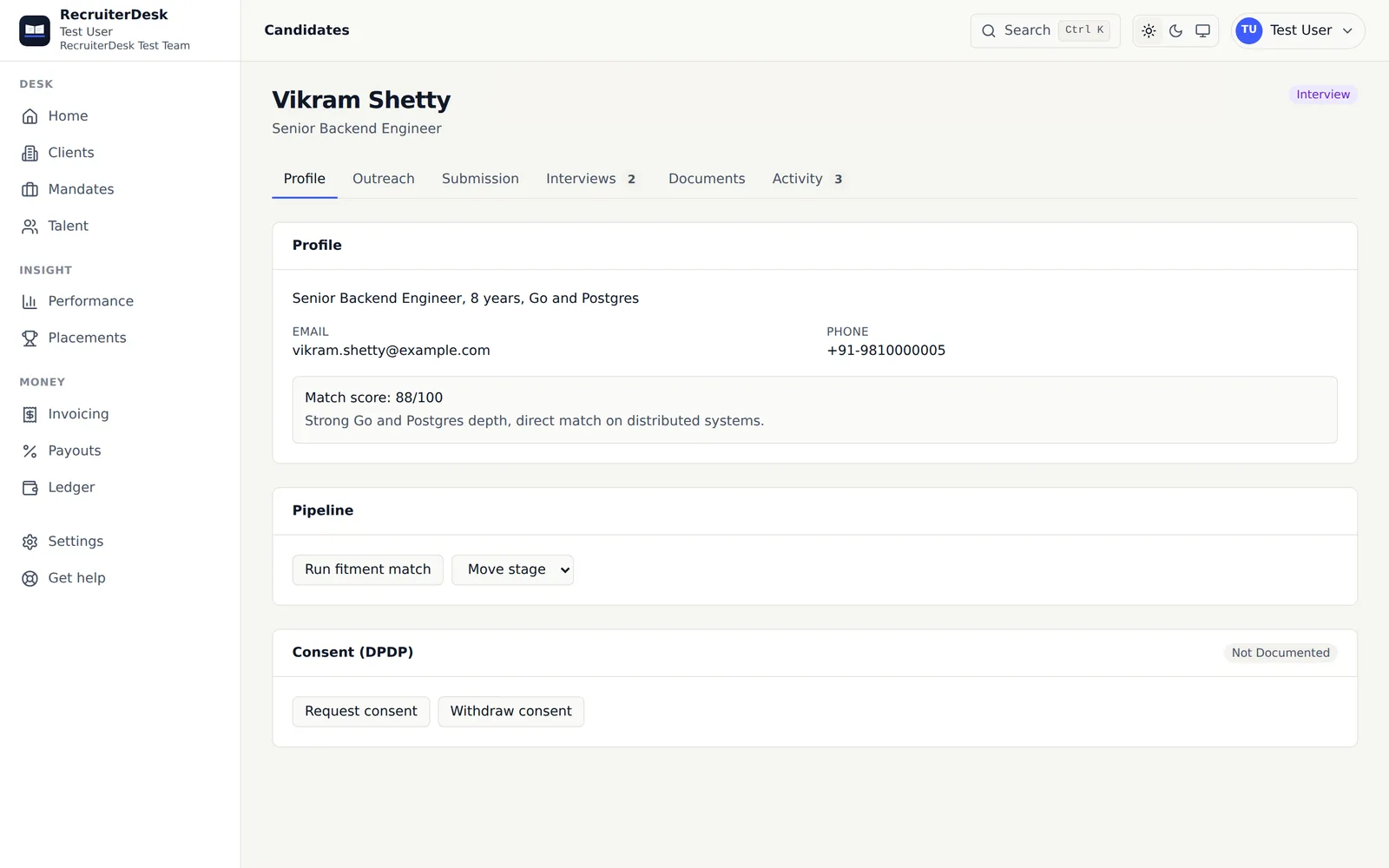
RecruiterDesk is built for exactly that: your mandates, your longlist, a weighted fitment checklist per role, and a defensible case behind every candidate, in one workspace. It will not run the search for you, but it will take the admin off it, so the craft is where your time goes.
Frequently asked questions
What are the stages of an executive search assignment?
An executive search runs through a clear sequence: scope the brief with the client and agree the criteria, map the relevant market, approach and engage potential candidates discreetly, assess them against the agreed criteria, present a short slate with reasoning, then support the interview, referencing and offer stages through to close. The work is low-volume and deliberate at every step.
How is executive search different from regular recruiting?
Executive search is low-volume, confidential and judgement-led. Instead of sourcing many applicants and filtering down, you identify a small set of leaders who may not be looking, approach them carefully, and assess each against a demanding brief. The decision turns on scope, scale and track record rather than keyword matches, and the client expects a considered slate with reasoning, not a long list.
How many candidates should be on an executive search shortlist?
A typical executive search slate is small, often three to five strongly assessed candidates rather than a long list. The value you provide is the judgement that gets to a short, high-conviction set, each of whom you can make a defensible case for. A long shortlist at this level usually signals that the assessment has not been done.
How do you assess senior candidates fairly?
Agree the deciding criteria with the client up front, the scope and scale the leader must have operated at, the sector and stage, the specific leadership outcomes required, and score every candidate against that same bar. Recording the criteria and the fit against each one keeps the assessment consistent and gives you a defensible reason behind each name you present.